Seed Germination Temperature, Domes and Heat Mats
Most vegetable seeds germinate best at 65° to 75°F. How to use domes and heat mats, when to remove the cover, and how to cool seedlings after sprouting.
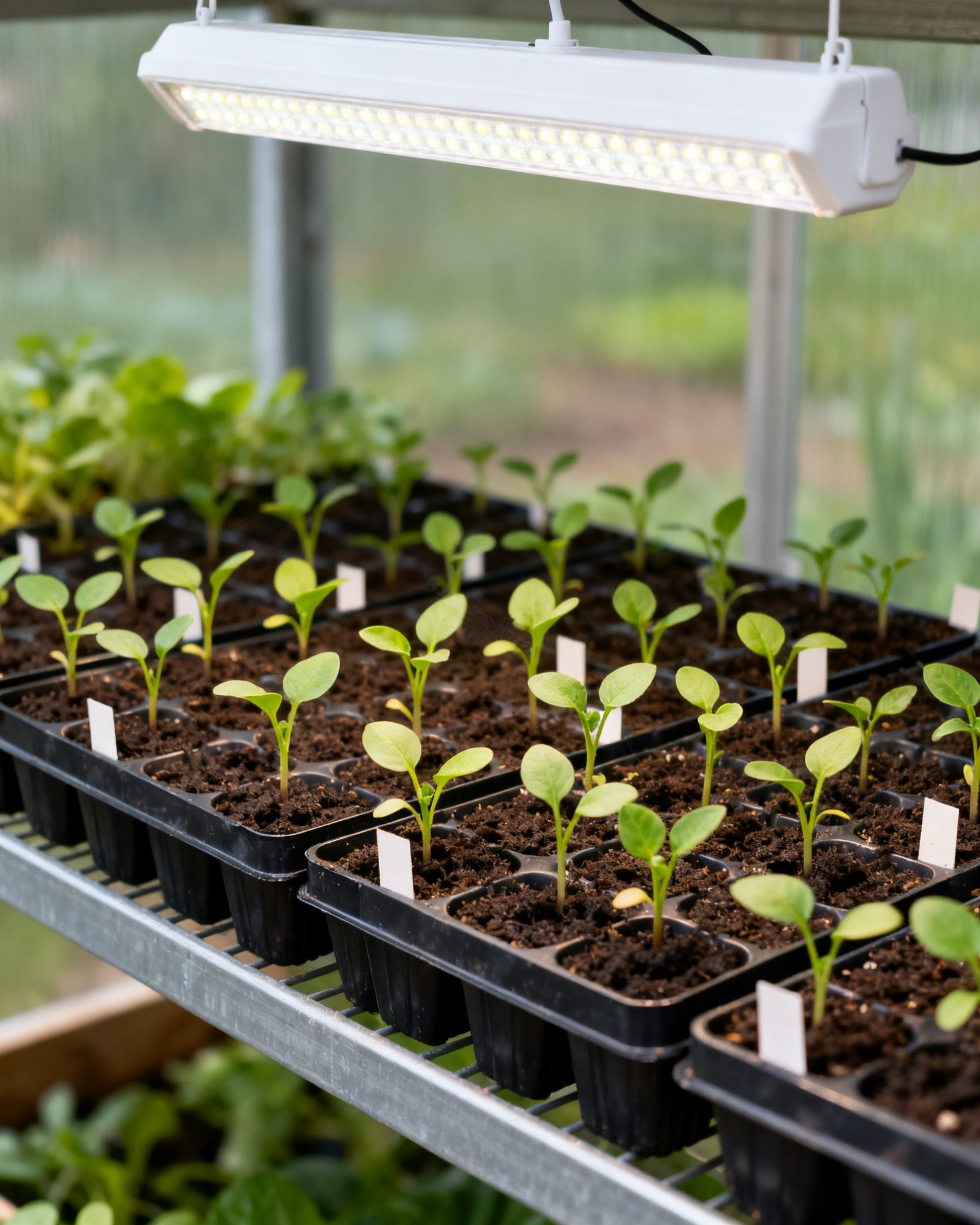
Most vegetable seeds germinate best when the seed-starting mix stays between 65° and 75°F, according to University of Maryland Extension. That is warmer than many homes in late winter, which is why a heat mat or a warm spot helps. The other half of germination is moisture: a clear cover holds humidity until the first sprouts appear, then comes off. Get those two things right and most packets will perform as labeled; get them wrong and you get damping-off, overheated seed or a flat that sits bare.
The temperature most vegetable seeds want
Maryland Extension gives 65° to 75°F as the potting-mix temperature that suits most vegetable seeds. That is the temperature of the mix, not the air in the room. A flat on a cool basement floor can sit well below the air temperature, and a flat on a shelf near a ceiling register can run warmer than the room.
A few crops are less fussy. Lettuce, pea, radish, carrot, beet and spinach germinate in soil above 40°F, and most warm-season seeds such as beans, squash and cucumbers will not germinate in soil below 50°F. Soil over 85°F is usually a problem only for spinach and lettuce seed. For a full sequence from packet to transplant, see how to start seeds indoors, step by step.
How long germination takes
Time to germination varies widely by crop. Maryland Extension’s germination test counts sprouts after 7 to 10 days in a warm place, and seed pre-sprouted in a moist paper towel shows roots after 5 to 7 days. Slow germinators include lima bean, parsley, watermelon and okra, which take 10 to 21 days at typical spring soil temperatures. If a flat kept at the right temperature stays bare well past the time on the packet, test the seed before changing the setup.
Domes: what they do and when they come off
A clear cover or humidity dome keeps moisture in the mix until sprouts appear. That matters because the surface of a small cell dries fast under lights or in a warm room, and a seed that dries after it has absorbed water can die.
The cover comes off as soon as the first sprouts appear. Maryland Extension is direct about this. Leaving a dome on after germination keeps humidity high and air still, which favors damping-off, the water-mold disease that collapses seedlings at the soil line. It also traps heat, and a closed flat under lights or on a mat can get much warmer than the room.
A few seeds are left uncovered from the start. Lettuce and celery germinate best in light and are left uncovered or barely covered with mix. If you cover the whole flat, those crops still germinate best in light, so a clear dome is fine but a dark cover is not.
Heat mats and warm spots
A seedling heat mat speeds germination by warming the mix from below. It is most useful for peppers, eggplant and tomatoes, which want the warm end of the range, and in cool rooms where the mix would otherwise sit below that range.
A plastic tent over a grow light can hold 70° to 75°F, and the top of a refrigerator is a warm spot that costs nothing. Any of these works; the point is to warm the mix, not the air.
The mat mistake
A heat mat left on after germination keeps seedlings warmer than they want, and warmth makes stretching worse. Once sprouts are up, Maryland Extension gives a target of 55° to 60°F at night and 65° to 70°F by day. That is cooler than the germination range. Turn the mat off or move the flat to a cooler spot when the first seedlings appear, and watch the mix: warmth plus a dome plus a sunny window can push temperatures well past what young plants tolerate.
A thermostat or a simple check with a kitchen thermometer in the mix is more reliable than guessing. If the mix feels hot to the touch, it is too warm.
Moisture: damp, not saturated
Moisten dry mix before filling containers; peat repels water when dry. The mix should be as moist as a wrung-out sponge. Fill containers to within one inch of the top.
During germination, keep the surface from drying out. After germination, water less often: wait until the top of the mix is nearly dry, then water from the top until it drains, or from below by setting containers in a shallow tray. Clemson Extension suggests filling a tray with 1 to 2 inches of water and letting the cells absorb it for 3 to 10 minutes. Saturated media starve roots of oxygen and invite damping-off.
Light and temperature after germination
Once seedlings are up, light becomes the limiting factor. A window is seldom enough; stems stretch and lean. Keep fluorescent or LED fixtures 2 to 6 inches above the plants, on for 14 to 16 hours a day with an outlet timer, per Maryland Extension. Clemson gives 16 to 18 hours and keeps tubes 2 to 4 inches above the seedlings, raising them as plants grow. After potting up, keep the tops of plants 1 to 2 inches from the lights. For fixture choices and setup, see grow lights for seedlings: distance, hours and setup.
A small fan near seedlings from the two-true-leaf stage makes them sway and begins toughening them. It also dries them faster, so watch moisture.
Comparing germination conditions
| Factor | During germination | After sprouts appear |
|---|---|---|
| Mix temperature | 65° to 75°F suits most vegetables (Maryland Extension) | 55° to 60°F night, 65° to 70°F day |
| Cover | Clear dome or cover to hold moisture | Remove as soon as sprouts appear |
| Heat mat | Useful for peppers, eggplant, tomatoes | Turn off or move to a cooler spot |
| Light | Not needed by most seeds; lettuce and celery need light to germinate | 14 to 16 hours a day, fixtures 2 to 6 inches above plants |
| Watering | Keep surface moist | Let top of mix dry slightly between waterings |
What goes wrong
The dome stays on. A cover left on keeps the surface wet, and damping-off needs free water. Seedlings under lights die of it when the mix is poorly drained or kept too wet. Remove the cover at the first sprout, and remove any infected seedlings with their mix; they cannot be saved.
The mat stays on. Warmth plus a dome plus light can overheat a flat. Germinated seedlings want cooler conditions than germinating seeds.
Sowing too early. Maryland Extension calls sowing too early a common mistake: it gives tall, root-bound plants that do poorly in the garden. Match the sowing date to the crop’s time indoors, not to the first warm day.
Seed planted too deep. A seed planted too deep may never emerge. Maryland Extension gives the rule as about twice the seed’s diameter on the starting-seeds page, and 2 to 3 times the seed’s diameter on the germination page. Heavy clay or crusted soil and cold, wet soil also slow or stop germination; corn and bean seed rot in cold, wet soil.
Old seed. Store leftover seed cool and dry, ideally sealed in the refrigerator. Onion, corn, leek and parsley seed are short-lived, 1 to 2 years. If a flat fails, run a germination test before blaming your technique: roll 20 seeds in a moist paper towel, put it in a plastic bag with a few holes in a warm place, and count after 7 to 10 days. Discard the seed if fewer than 50% sprout. For more causes, see seeds not germinating? Common causes and a germination test.
Fungus gnats. Tiny dark flies around pots are mainly a sign of overwatering. Let the mix dry and use yellow sticky traps to monitor. Products based on Bacillus thuringiensis var. israelensis (Bti) are labeled for the larvae; follow the label.
Fertilizing too early or too hard. Most potting mixes carry enough fertilizer for at least 6 weeks, and some labels say 6 to 8 weeks after germination. Clemson’s practice is to feed at every other watering once the first true leaves appear, with plain water between feedings. Rinse liquid fertilizer off leaves; young seedlings are easily burned.
Common questions
How warm should the soil be for seeds to germinate?
University of Maryland Extension gives 65° to 75°F for most vegetable seeds. That is the mix temperature, not the room. A heat mat, a warm spot or a plastic tent over a light can hold that range in a cool house.
When should I take the humidity dome off my seedlings?
As soon as the first sprouts appear. Leaving it on keeps the air still and humid, which favors damping-off, and traps heat under lights. Lettuce and celery seed is left uncovered or barely covered by mix because it germinates best in light; a clear dome over it is fine.
Do I need a heat mat to start seeds?
Not for every crop, but it helps warm-season seeds like peppers, eggplant and tomatoes and any flat in a cool room. Turn it off or move the flat once seedlings are up, because germinated plants want cooler conditions: 55° to 60°F at night and 65° to 70°F by day.
How long do seeds take to germinate?
It varies by crop, and the extension sources give no single figure. Maryland Extension's germination test counts sprouts after 7 to 10 days in a warm place. Lima bean, parsley, watermelon and okra are slow, taking 10 to 21 days at typical spring soil temperatures. Check the packet and give the seed the right temperature before assuming it is dead.
Why did my seedlings collapse at the soil line?
That is damping-off, caused by water molds that need free water. It hits when the mix is poorly drained or kept too wet, often with a dome left on. Infected seedlings cannot be saved; remove them with their mix, wash containers and let the surface dry slightly between waterings.
Read next
Grow Lights for Seedlings: Distance, Hours and Setup
How far to hang grow lights above seedlings, how many hours a day they need, LED versus fluorescent, and the setup mistakes that leave plants leggy and weak.
How to Start Seeds Indoors, Step by Step
A practical, step-by-step guide to starting vegetable and herb seeds indoors: timing, containers, mix, warmth, light, watering, potting up and hardening off.
Potting Up Seedlings: When and How to Move Them
Learn when to pot up seedlings, how to separate and lift them without damage, what container size to use, and how to avoid mistakes that set plants back.