Build a Seed Starting Calendar from Your Frost Date
Turn one frost date into a full sowing and planting schedule: weeks indoors per crop, cool- versus warm-season timing, hardening off, and succession sowing.
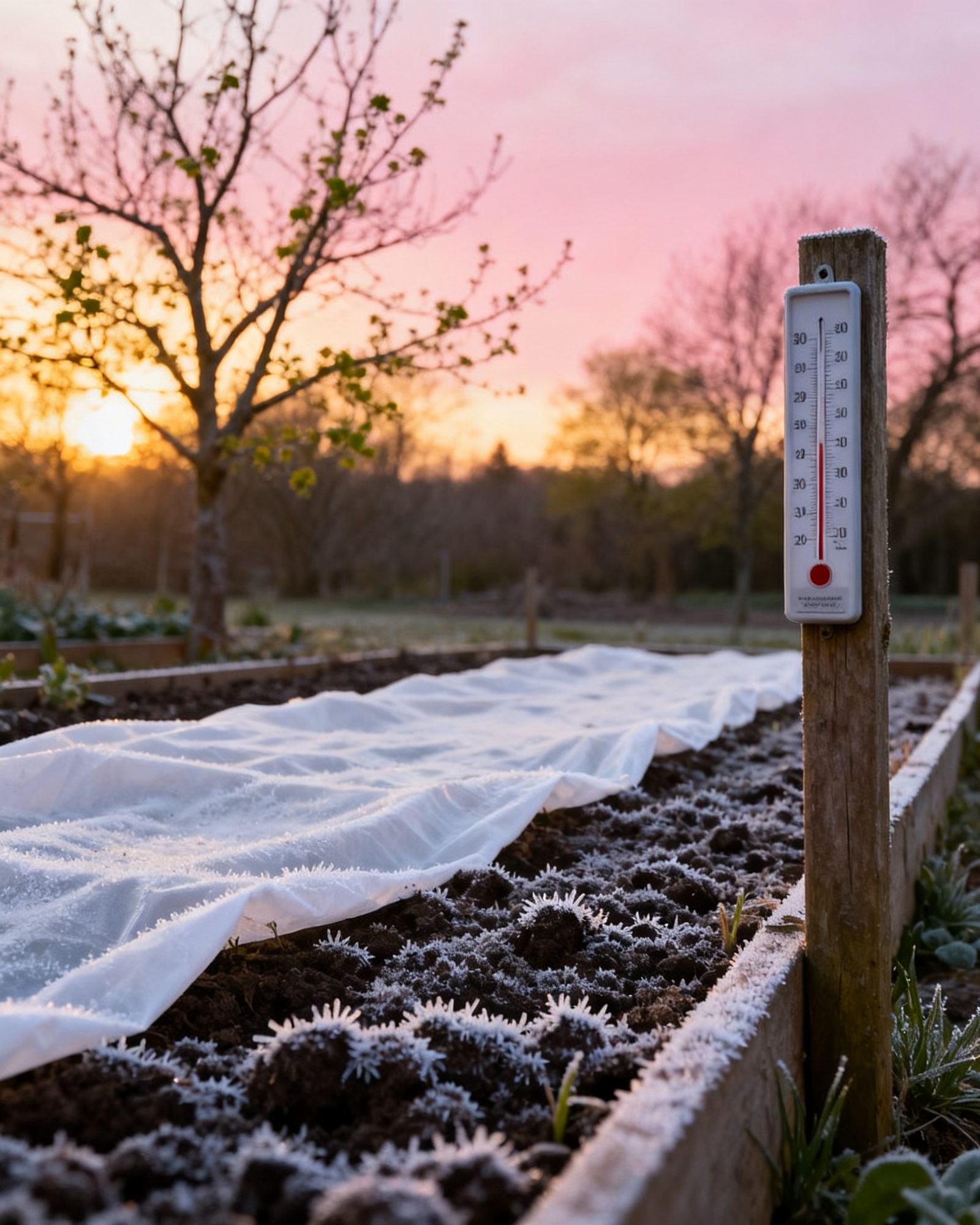
A seed starting calendar is built backward from two dates: the last spring frost, which sets when tender crops can go outside, and the first fall frost, which sets when the fall garden has to finish. Pick a target planting-out date for each crop, subtract the weeks that crop needs indoors, and you have a sowing date. The rest of the calendar is bookkeeping: hardening off before planting out, and repeat sowings for crops you want over a longer season.
Two dates, two different tools
The last frost date is the anchor for spring. It is a probability, not a promise: the date usually quoted is the 50% date for 32°F, meaning the last freeze comes later in one year out of two. A cautious gardener uses the 10% date, when only one year in 10 has a later freeze. Frost dates are past averages from weather stations, so your garden can run earlier or later. How to find your last frost date and how much to trust it covers the probability tables and local sources.
Hardiness zones answer a different question. The USDA map is based on the average annual extreme minimum winter temperature, in 10°F bands split into 5°F half zones. It tells you whether a perennial is likely to survive your winter. It says nothing about frost dates, summer heat, rainfall or soil, and a south-facing wall or a frost pocket can differ from the mapped zone. What your USDA hardiness zone does and does not tell you explains the map; use it for perennials, and use frost dates for annual vegetables.
Count back from planting out, not forward from a sowing date
Every crop has an approximate indoor growing time. Maryland Extension gives leafy greens 2 to 4 weeks; cabbage, broccoli and cauliflower 4 to 6 weeks; cucumber, squash and melons 3 to 5 weeks; tomato 5 to 6 weeks; and pepper, eggplant and onion 8 to 10 weeks. Clemson Extension’s table runs a little longer for some crops: broccoli, Brussels sprouts, cabbage, cauliflower, collard and kale 5 to 7 weeks; lettuce 5 to 7 weeks; tomato and eggplant 6 to 8 weeks; pepper 8 to 10 weeks. Where the two differ, use the range as a guide and watch the plants.
Sowing too early is the most common calendar error. Seed started ahead of schedule becomes tall and root-bound and does poorly in the garden. The count-back method protects against this: the sowing date is set by the planting-out date, not by impatience. When to start seeds indoors, counted back from your last frost walks through the per-crop arithmetic.
Cool-season and warm-season crops leave the house at different times
Cool-season crops tolerate frost and go out before the last frost date. Broccoli is hardy and withstands heavy frost; five- to seven-week-old transplants go out four weeks before the last spring frost. Lettuce and cabbage are also hardened off and set out early, though they should come in if a freeze is forecast.
Warm-season crops wait for frost-free weather and warm soil. Tomato goes out after all danger of frost when the soil has warmed. Pepper is set out after the soil has thoroughly warmed; planted before the soil reaches 65°F, peppers “just sit there.” Cucumber and melon are very tender and can stay out overnight only if the night will not fall below 50°F. Basil is not tolerant of chilly temperatures and is planted after all danger of frost.
Soil temperature is the second gate. Most warm-season seeds, including beans, squash and cucumbers, will not germinate in soil below 50°F. A calendar date can arrive while the soil is still cold, so check the soil before setting out tender crops.
A worked calendar in weeks
The table below is relative, not dated. For each crop, find its planting-out point against your own last frost date, then count the weeks indoors back from that point to get the sowing date.
| Crop | Weeks indoors before setting out | When it goes out | Notes |
|---|---|---|---|
| Broccoli | 4 to 6 (Maryland); 5 to 7 (Clemson) | Four weeks before the last spring frost | Hardy; below 45°F can stop heading or cause bolting |
| Lettuce | 2 to 4 for leafy greens (Maryland); 5 to 7 (Clemson) | Before the last frost, once hardened off | Bring in if a freeze is forecast |
| Tomato | 5 to 6 (Maryland); 6 to 8 (Clemson) | After all danger of frost, once the soil has warmed | Stocky 8- to 10-inch plants from a 5- to 6-week sowing (Maryland) |
| Pepper | 8 to 10 | After the soil has thoroughly warmed | Planted before the soil reaches 65°F, peppers sit; some types need 12 weeks from seed |
| Cucumber, squash, melon | 3 to 5 | After frost, once the soil has warmed | Disturb roots as little as possible; 50°F night minimum |
| Basil | Follow the seed packet | After all danger of frost | Full sun |
Hardening off belongs in the calendar as a block of days, not an afterthought. Maryland Extension describes a 5- to 14-day period beginning 1-2 weeks before planting out; Clemson suggests starting once plants are about three inches tall and continuing two to three weeks. Put the hardening-off window on the calendar before the planting-out date, and count the days back from there to the sowing date.
Succession sowing keeps the harvest coming
A single sowing date for everything is the other common mistake. Even within one crop, a first sowing and a second sowing a few weeks later spread the harvest and reduce the risk that one bad weather week takes the whole crop. The calendar should show repeat sowings for quick crops such as lettuce and basil, and a fall sowing for broccoli: fall transplants take about 4 to 6 weeks from seeding, and fall broccoli often yields better than spring in the mid-Atlantic. Work backward from the first fall frost for fall crops, just as you worked backward from the last spring frost for spring ones.
What goes wrong with a seed starting calendar
- One sowing date for everything. Crops have different indoor times and different frost tolerance. A single date either starts peppers too late or tomatoes too early.
- Ignoring soil temperature. A warm-season crop set out on the frost-free date into cold soil stalls. Pepper before 65°F soil and cucumber below 50°F nights are the classic cases.
- Sowing too early. Early sowing gives tall, root-bound plants that do poorly. The calendar should be built from the planting-out date backward, not from the first warm day.
- Leaving hardening off off the calendar. Hardening off takes days to weeks, and skipping it sets back plants that were otherwise on schedule. Overdoing it harms some crops: cauliflower can form thumb-sized heads and stop.
- Treating the frost date as a forecast. It is a past average. Check the forecast before setting out tender plants, and keep row cover or pots ready for a late cold night.
- Crowding the calendar with tender crops too close together. Seedlings left in the flat too long become leggy and root-bound. Pot them up on schedule or sow them closer to their planting-out date.
A calendar is a plan, not a contract. Weather moves the dates, and the useful habit is to check the forecast and the soil before each step, then adjust the next sowing accordingly.
Common questions
How do I make a seed starting calendar from my last frost date?
Pick a target planting-out date for each crop relative to your last frost date, then subtract the weeks that crop needs indoors. For example, tomato needs 5 to 6 weeks indoors, so count back from its planting-out date. Add a hardening-off block of days before planting out.
Can I use my USDA hardiness zone to plan seed starting?
No. Hardiness zones describe average annual extreme minimum winter temperature and are a guide for perennial survival. They say nothing about frost dates, so use your last frost date for annual vegetables and your zone for perennials.
Why do my seedlings get tall and weak before planting out?
Usually too little light, made worse by warmth and crowding. Keep fixtures close to the plants and move seedlings to their own containers on schedule. Sowing too early also produces tall, root-bound plants that do poorly in the garden.
When can I set out peppers and cucumbers?
Peppers go out after the soil has thoroughly warmed; planted before the soil reaches 65°F, they sit and do little. Cucumbers and melons are very tender and can stay out overnight only if the night will not fall below 50°F.
Do I need to harden off every crop?
Hardening off matters most for cabbage, broccoli and cauliflower, and less for warm-season transplants set out after all danger of frost into soil above 60°F. Maryland Extension describes a 5- to 14-day period; Clemson suggests two to three weeks starting when plants are about three inches tall.
Read next
Fall Vegetable Transplants: Planning a Second Season
Use your first fall frost date to count back and schedule fall transplants: brassicas, greens, summer seed starting, hardening off in heat, and watering.
Last Frost Date: How to Find It and How Much to Trust It
Learn where last frost dates come from, what the 10/50/90 percent probabilities mean, and how to turn a frost date into a safe planting schedule.
USDA Hardiness Zones: What Your Zone Tells You
The USDA hardiness zone map shows average winter cold, not frost dates. Learn what a zone such as 7a means, how to find yours, and what to plan by instead.