USDA Hardiness Zones: What Your Zone Tells You
The USDA hardiness zone map shows average winter cold, not frost dates. Learn what a zone such as 7a means, how to find yours, and what to plan by instead.
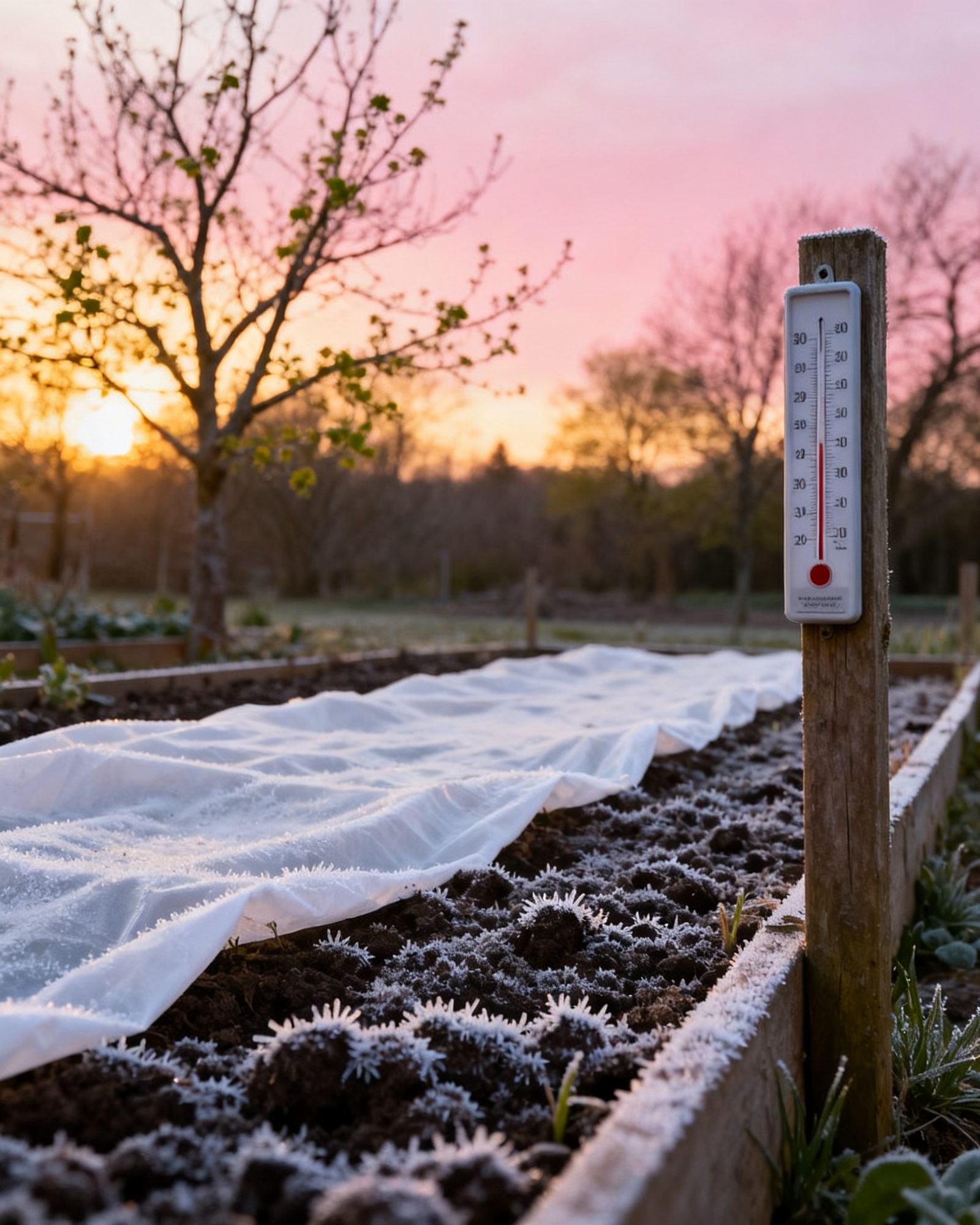
The USDA Plant Hardiness Zone Map answers one question: how cold does it get in winter, on average, where you garden? It is a guide to whether a perennial plant is likely to survive the winter. It is not a planting calendar, and it does not tell you when to set out tomatoes. For that you need frost dates, which are a separate tool. The two are often confused, so it helps to keep them apart from the start.
What the 2023 USDA Plant Hardiness Zone Map measures
The 2023 map, published by the USDA Agricultural Research Service, is based on the average annual extreme minimum winter temperature. That is the average of the coldest night of each year over a 30-year period, not the coldest temperature ever recorded. The map uses weather data from 1991 to 2020, drawn from 13,625 stations and mapped in cells about a half mile on a side.
Zones are 10-degree Fahrenheit bands, from zone 1 (coldest) to zone 13 (warmest). Each zone is split into half zones, “a” and “b,” which are 5-degree bands. Zone 7a is the colder half of zone 7; zone 7b is the warmer half. Zones 12 and 13 appear only in Hawaii and Puerto Rico.
You can find your zone by ZIP code on the USDA site. The map is a general guide for perennial survival. It says nothing about frost dates, summer heat, rainfall or soil. Microclimates — a south-facing wall, a frost pocket, a city heat island — can differ from the mapped zone.
What changed from the 2012 map
The 2023 map is generally about one quarter-zone warmer than the 2012 map across much of the country. Part of that comes from the newer averaging period, and part from more data and better methods. Some places moved to a cooler zone. A changed zone is no reason to remove plants that are thriving.
How to find your zone and read it
Enter your ZIP code on the USDA Plant Hardiness Zone Map site. The result is your zone and half zone. Read it as a winter-cold rating. If a plant is listed as hardy to zone 6 and you garden in zone 5, the winter cold is likely to injure or kill it. If you garden in zone 7a, plants rated hardy to zone 7a or colder are generally expected to survive a typical winter. That is all the number means.
What zones do not tell you: frost dates
A hardiness zone is built from winter minimums. Frost dates are built from the timing of freezing temperatures in spring and fall. They answer different questions. The National Centers for Environmental Information (NCEI) publishes probable dates of last spring and first fall frost, freeze and hard freeze for weather stations across the US, calculated from 30-year periods (the tables in use describe 1981-2010). A freeze is air temperature below 32°F; a hard freeze is below 28°F; 36°F is the threshold NCEI uses for frost, because frost can form above freezing when the air is humid.
The tables give probabilities from 10% to 90%. The date usually quoted as the “average last frost date” is the 50% date for 32°F — in one year out of two the last freeze comes later than that date. A conservative gardener plants by the 10% date, when only one year in 10 has a later freeze. The freeze-free period is the number of days between the last spring freeze and the first fall freeze at a given probability.
| Tool | Question it answers | Source and basis |
|---|---|---|
| USDA hardiness zone | How cold do winters get, on average? Will this perennial survive? | USDA Agricultural Research Service, 2023 map; average annual extreme minimum winter temperature, 1991-2020 data |
| Last frost date | When has the last spring freeze usually passed, and at what odds? | NCEI frost tables; 50% date for 32°F, with 10% to 90% probabilities |
| First fall frost date | How long does the growing season run? When should fall crops go out? | NCEI frost tables; first fall freeze at a chosen probability |
Frost dates are past averages, not forecasts. Microclimates and each year’s weather differ. Check the forecast before setting out tender plants, and ask the local Cooperative Extension office for local dates. For a closer look at how to read the spring date and how much to trust it, see last frost date: how to find it and how much to trust it.
Turning a frost date into a sowing schedule
Once you have a last frost date, work backward. The seed packet and Extension guides give the time a crop needs indoors before transplanting. For example, Maryland Extension gives leafy greens 2 to 4 weeks indoors; cabbage, broccoli and cauliflower 4 to 6 weeks; cucumber, squash and melons 3 to 5 weeks; tomato 5 to 6 weeks; pepper, eggplant and onion 8 to 10 weeks. Clemson Extension’s table differs somewhat: tomato and eggplant 6-8 weeks, pepper 8-10 weeks, lettuce 5-7 weeks. Where sources differ, use the range as a guide and watch the plants.
Count back from your last frost date, whatever your zone. If your local last frost date is in mid-April, tomato seed goes in about 5 to 6 weeks before that date. Peppers go in earlier, 8 to 10 weeks before. A common mistake is sowing too early, which gives tall, root-bound plants that do poorly in the garden (Maryland Extension).
For a step-by-step method, see how to build a seed starting calendar from your frost date. For a second season, fall crops are timed from the first fall frost instead; see fall vegetable transplants: planning a second season.
Cool-season and warm-season crops
Hardening off and planting out depend on temperature, not zone. Clemson Extension suggests starting hardening off once plants are about three inches tall and continuing for two to three weeks. Maryland Extension describes a 5- to 14-day period beginning 1-2 weeks before planting out. Do not put tender seedlings out on windy days or below 45°F. Bring cool-season crops such as lettuce and cabbage in if a freeze is forecast, and warm-season crops such as tomato and pepper in if the night will drop below 50°F. Cucumbers and melons stop growing if hardened too severely and can stay out overnight only if it will not fall below 50°F.
Common mistakes: using a zone to time vegetables
The most common error is treating the hardiness zone as a planting calendar. A zone number says nothing about when the last frost will come. Two gardens in the same zone can have last frost dates weeks apart. Use the zone to choose perennials and to understand winter cold; use frost dates to time sowing and transplanting.
Other mistakes:
- Planting by the 50% frost date without checking the forecast. In one year out of two, the last freeze comes later.
- Assuming a warmer zone means a longer growing season. Frost dates and summer heat are separate.
- Ignoring microclimates. A south-facing wall can be warmer than the mapped zone; a low spot can be a frost pocket.
- Starting seeds too early indoors. Tall, root-bound transplants do poorly.
- Setting out tender crops before the soil has warmed. Pepper planted before the soil reaches 65°F will “just sit there,” according to Maryland Extension.
What to do with your zone number
Use the zone to choose perennial plants and to judge whether a plant is likely to survive winter where you garden. Use frost dates to plan seed starting, hardening off and transplanting. Check the USDA map for your zone, then get local frost dates from NCEI tables or the Cooperative Extension office. Keep the two tools separate, and the schedule falls into place.
Common questions
What is my planting zone?
Enter your ZIP code on the USDA Plant Hardiness Zone Map site. The result is your zone and half zone, such as 7a or 7b. It is based on the average annual extreme minimum winter temperature.
What does zone 7a mean?
Zone 7a is the colder half of zone 7, a 5-degree Fahrenheit band within the 10-degree zone 7. It tells you the average coldest winter night in that area. It does not tell you when to plant vegetables.
What is the difference between a hardiness zone and a frost date?
A hardiness zone is based on average winter minimum temperature and is used for perennial survival. A frost date is the probable date of the last spring or first fall freeze and is used to time sowing and transplanting.
Can I use my hardiness zone to decide when to plant tomatoes?
No. Tomatoes are tender and should go out after the last frost date when the soil has warmed. Use your local frost date, not your zone, to time seed starting and transplanting.
Did my hardiness zone change from the 2012 map?
The 2023 map is generally about one quarter-zone warmer than the 2012 map across much of the country, though some places moved to a cooler zone. A changed zone is no reason to remove plants that are thriving.
Read next
Fall Vegetable Transplants: Planning a Second Season
Use your first fall frost date to count back and schedule fall transplants: brassicas, greens, summer seed starting, hardening off in heat, and watering.
Last Frost Date: How to Find It and How Much to Trust It
Learn where last frost dates come from, what the 10/50/90 percent probabilities mean, and how to turn a frost date into a safe planting schedule.
Build a Seed Starting Calendar from Your Frost Date
Turn one frost date into a full sowing and planting schedule: weeks indoors per crop, cool- versus warm-season timing, hardening off, and succession sowing.