Hemp Harvest Timing and the Pre-Harvest Test
Hemp harvest timing is both an agronomic and a compliance decision. Learn season lengths, the 30-day sampling window, frost risk, and how to plan capacity.
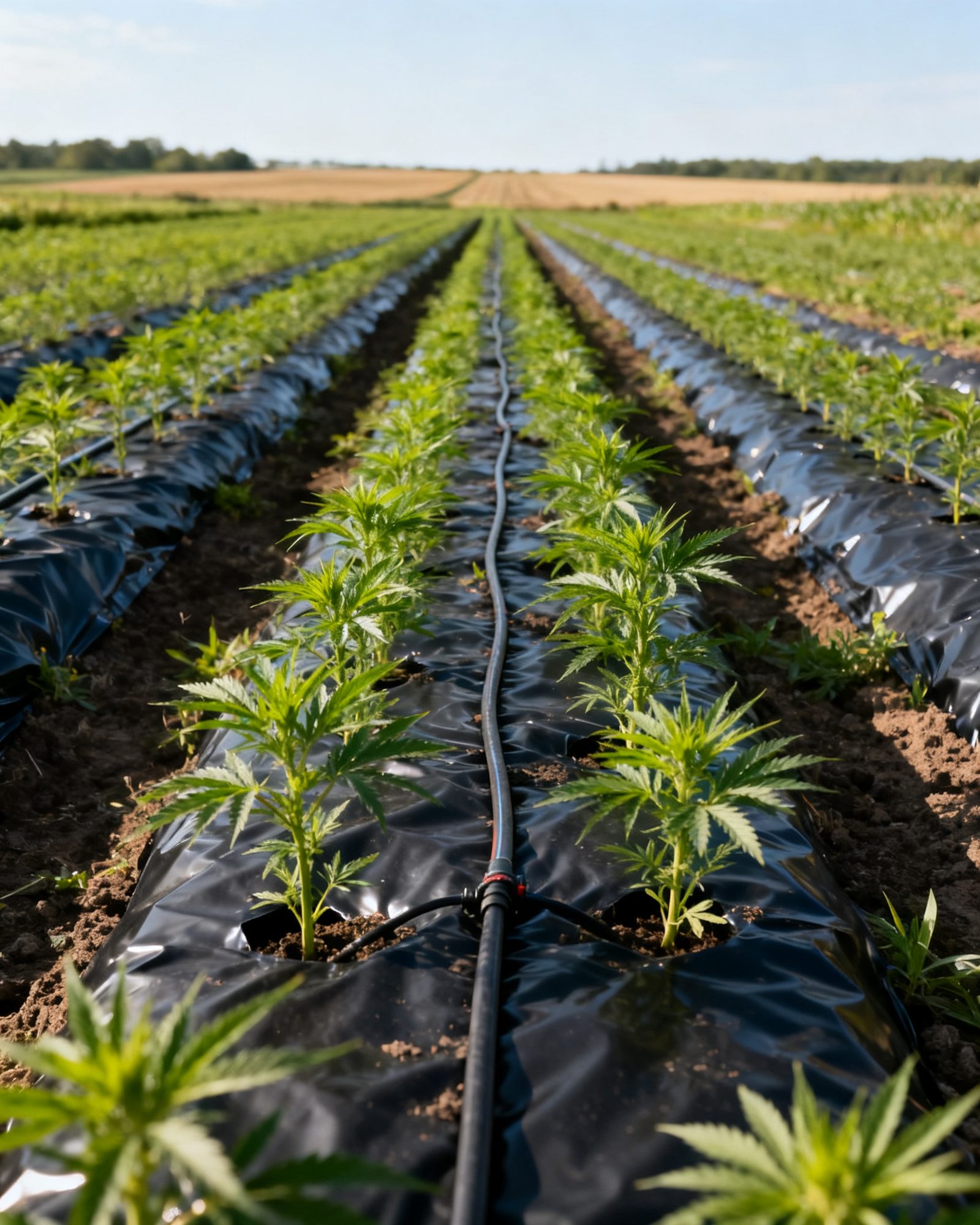
Hemp harvest timing is set by two clocks that run at once: the plant’s maturity and the regulatory sampling window. For full-season types, the crop needs most of the growing season to finish, and the official pre-harvest sample must be taken no more than 30 days before the anticipated harvest. Total THC rises as flowers mature, so a late harvest can push a lot over the acceptable limit even when the field looked fine a few weeks earlier. The practical answer is to set a target harvest date early, count back to the sampling window, and line up labor, equipment and drying before the crop is ready. Growing hemp requires a license under a state, tribal or USDA plan, and the federal definition is changing, so check current rules with your state department of agriculture (or USDA where there is no state or tribal plan) before you commit a field.
Full-season and autoflower types run on different calendars
Hemp types differ in how much season they use, and that difference drives the whole harvest plan.
Full-season, short-day types are daylength-sensitive and use nearly the whole season, 120-140 days. Depending on spacing, they can be 5- to 7-feet-tall with up to a 5-foot diameter. They finish late, which can put harvest into cooler, wetter weather and leaves little room for error.
Autoflower, day-neutral types finish in 70-90 days and stay 2- to 3-feet-tall with a 1- to 2-foot diameter. In southern Oregon they can be harvested by late July, avoiding the highest water demand of the season. A shorter crop is easier to handle, but the harvest still has to be scheduled around the sampling window and the weather.
| Type | Days to finish | Typical size | Harvest position in the season |
|---|---|---|---|
| Full-season (short-day) | 120-140 days | 5-7 feet tall, up to 5-foot diameter | Late in the season |
| Autoflower (day-neutral) | 70-90 days | 2-3 feet tall, 1-2 foot diameter | Early; can finish by late July in southern Oregon |
Grain and fiber types are managed differently again: they are taller, grown through to seed, and planted at very high populations, as high as 500,000 to 1 million plants per acre. Their harvest timing follows the seed crop, not the flower. The notes below apply to cannabinoid types unless stated otherwise.
Why harvest timing is also a compliance step
Under 7 CFR 990, a sampling agent must collect samples no more than 30 days before the anticipated harvest. Samples come from the flowering tops: the top five to eight inches of the main stem, terminal bud or central cola. The laboratory reports total delta-9 THC on a dry weight basis after decarboxylation, meaning THC plus the THC that THCA would become, together with its measurement of uncertainty.
That 30-day window is the reason harvest timing cannot be left to the last minute. The sample has to represent the crop as it will be cut, and total THC rises as flowers mature. A field sampled early and cut late is not the same crop the laboratory tested. The practical sequence is: set the anticipated harvest date, schedule sampling inside the window, and hold the harvest plan to that date; if the crop needs more time, ask the plan whether a new sample is required.
A lot that tests above the acceptable hemp THC level must be disposed of or remediated under the plan’s procedures. A test above 0.3 percent is not a negligent violation if the grower made reasonable efforts and the plant did not exceed 1.0 percent total THC on a dry weight basis. A producer with three negligent violations in a 5-year period becomes ineligible to produce hemp for 5 years. Those consequences are why the sampling date belongs on the harvest calendar alongside the weather.
USDA is delaying until December 31, 2026 enforcement of the requirement that hemp be tested by a DEA-registered laboratory. The licensing, sampling and testing sequence is set out in more detail on hemp licensing, pre-harvest sampling and THC testing.
Frost, cold and the end of the season
Mature hemp tolerates a light frost of 29-32°F that would kill seedlings in spring, so transplants go out after the danger of frost. Harvest ideally comes before the first hard frost, according to University of Vermont Extension.
The frost question is really a scheduling question. In regions where the first hard frost arrives before a full-season crop finishes, the harvest window is squeezed between maturity and cold. Autoflower types avoid that squeeze by finishing earlier. Either way, watch the forecast in the final weeks and have a plan for a frost that arrives ahead of schedule.
Planning harvest capacity before the crop is ready
Harvest capacity is the part of the plan most often left too late. Cutting, handling, drying and testing all compete for the same few weeks, and a crop that is ready all at once can overwhelm a small operation.
Work through these steps before the season starts:
- Set the target harvest date from the type’s season length and the local frost pattern.
- Count back 30 days to the earliest sampling date and book the sampling agent.
- Confirm drying space and airflow for the volume the field will produce.
- Line up labor and equipment for the cut, and a backup date if weather interferes.
- Check the current rules with the state department of agriculture, since dates and requirements can change.
Spacing decisions made at planting also affect harvest. Widely spaced plantings give more side branches per plant; dense spacing gives more total flower per acre. Dense plantings in humid climates or under overhead sprinklers raise the risk of powdery mildew and gray mold. Drip irrigation and enough spacing for air movement help. The agronomic side of these choices is covered in industrial hemp farming basics in the US.
The federal definition is changing
Until 2018 hemp was treated as marijuana under the Controlled Substances Act. The Agriculture Improvement Act of 2018 removed hemp from the definition of marijuana and set the limit at a delta-9 THC concentration of not more than 0.3 percent on a dry weight basis. In November 2025 the FY2026 agriculture appropriations act amended the definition so that, once in effect, the 0.3 percent dry-weight limit applies to total THC, including THCA, not only delta-9 THC. The new definition explicitly includes industrial hemp grown for stalk, fiber, grain, seed oil and similar non-cannabinoid uses, and excludes viable seeds above the total THC limit, intermediate products above 0.3 percent total THC, and final cannabinoid products with more than 0.4 milligrams of THC per container.
The change was to take effect November 12, 2026. The Continuing Appropriations and Extensions Act, 2027 delayed parts of the new definition to December 11, 2026; the exclusion of products with cannabinoids not naturally produced by the plant still takes effect November 12, 2026. Rules and dates may change again. Check current rules before planting, and confirm the testing and harvest requirements that apply to your site with your state department of agriculture.
What goes wrong
Harvesting late. Total THC rises as flowers mature, so a crop left in the field well past the sampled date no longer matches what the laboratory tested, and the 30-day window can close. A late harvest can also run into colder, wetter weather.
Missing the sampling window. The sample must be taken no more than 30 days before the anticipated harvest. A harvest that starts before sampling, or a sample taken too early and followed by a much later cut, breaks the sequence the plan depends on.
Losing sight of the result. The laboratory result and its measurement of uncertainty decide whether the lot is within the acceptable level. Check with the plan what may be done with the harvested lot while the result is pending.
Assuming the rules will not change. The federal definition was amended in November 2025; the change was due November 12, 2026, with parts delayed to December 11, 2026. A harvest plan built on last season’s rules may not fit this season’s.
Ignoring frost risk. A light frost of 29-32°F is tolerable for mature plants, but harvest ideally comes before the first hard frost.
No drying capacity. A crop cut on schedule still has to be dried and handled. Space and airflow arranged after the cut is a common bottleneck.
Treating the license as a formality. A person with a state or federal felony conviction relating to a controlled substance may not produce hemp for 10 years from the date of the conviction. USDA licensees report hemp acreage to the USDA Farm Service Agency within 30 days of planting, with the location of each lot. These are conditions of production, not paperwork after the fact.
For any question about the current harvest, sampling or testing requirements where you farm, contact your state department of agriculture or the USDA hemp program.
Common questions
When should I harvest hemp?
Set the target date from the type's season length and the local frost pattern, then count back to the sampling window. The official sample must be taken no more than 30 days before the anticipated harvest, and total THC rises as flowers mature, so plan the sample and the cut together rather than waiting for the field to look finished.
What is the hemp harvest window?
Agronomically, it is the stretch when the crop is mature and the weather allows a cut; for compliance, the official sample must fall no more than 30 days before that harvest. For full-season types that window sits late in the season; for autoflower types it comes earlier. Weather, drying capacity and laboratory turnaround all compress it.
Can hemp survive frost before harvest?
Mature hemp tolerates a light frost of 29-32°F that would kill seedlings in spring, so harvest ideally comes before the first hard frost, according to University of Vermont Extension. Watch the forecast in the final weeks and keep a plan for an early frost.
Do full-season and autoflower hemp harvest at different times?
Yes. Full-season, short-day types use nearly the whole season, 120-140 days, and finish late. Autoflower, day-neutral types finish in 70-90 days and can be harvested by late July in southern Oregon. The choice affects both the harvest date and the weather the crop is cut in.
What happens if my hemp tests above the limit?
A lot that tests above the acceptable hemp THC level must be disposed of or remediated under the plan's procedures. A test above 0.3 percent is not a negligent violation if the grower made reasonable efforts and the plant did not exceed 1.0 percent total THC on a dry weight basis. Three negligent violations in a 5-year period make a producer ineligible for 5 years.
Read next
Hemp Licensing, Pre-Harvest Sampling and THC Testing
How hemp licensing, FSA acreage reporting, the 30-day pre-harvest sampling window, total THC testing and negligence rules work under federal and state plans.
Hemp Transplants vs. Direct Seeding on the Farm
How hemp growers choose between transplants and direct seeding: crop type, frost timing, hardening off, plastic mulch and drip, and the license rules that apply.
Hemp Plant Spacing and Irrigation Basics
Oregon State density figures for cannabinoid hemp, what spacing changes, drip under plastic mulch, irrigation response and disease risk with overhead water.