Hemp Transplants vs. Direct Seeding on the Farm
How hemp growers choose between transplants and direct seeding: crop type, frost timing, hardening off, plastic mulch and drip, and the license rules that apply.
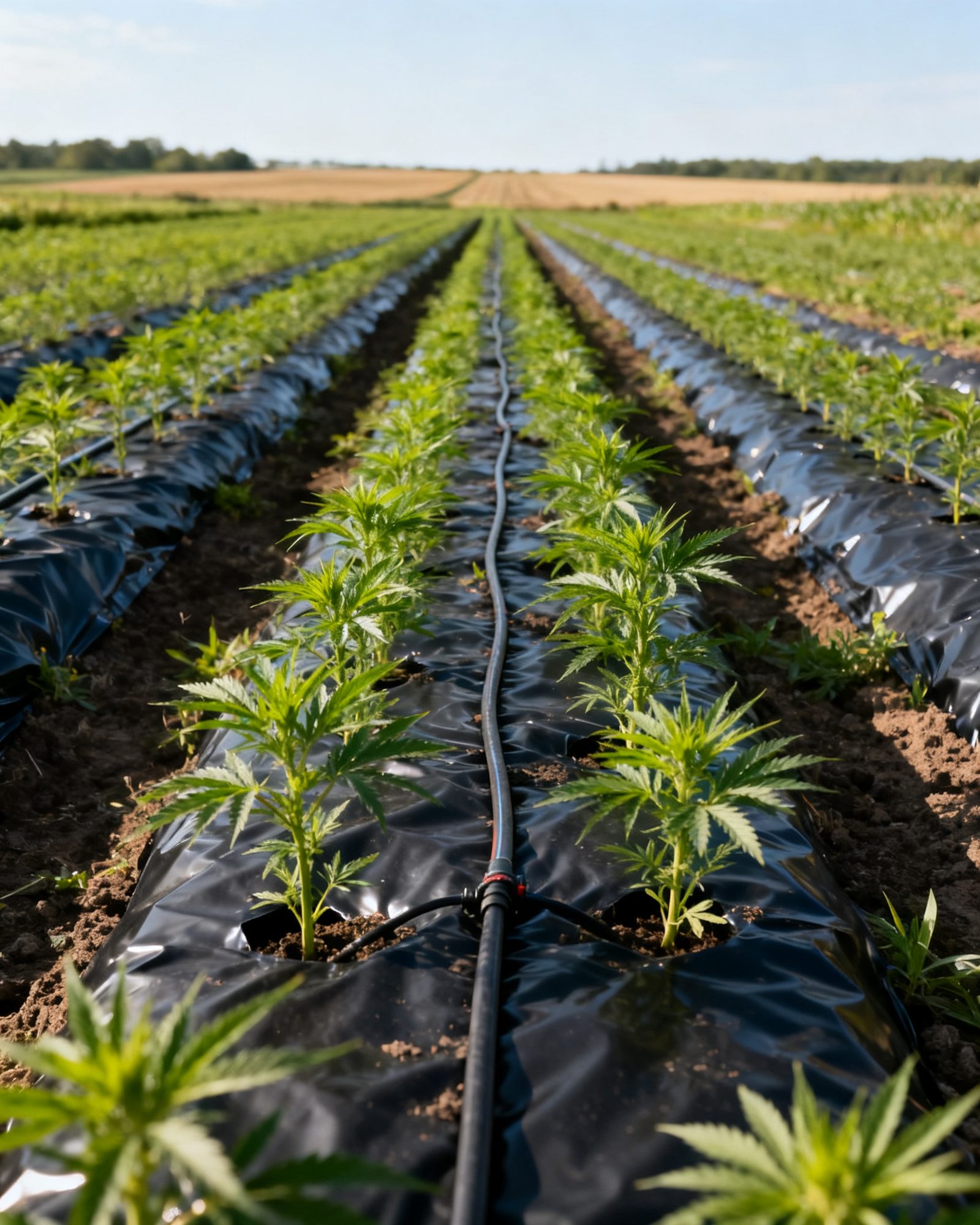
Hemp is not one crop with one planting method. Cannabinoid hemp is usually started as transplants and set out at low density, while grain and fiber hemp is direct-seeded at very high populations. The choice follows the end use, the length of the season, the frost risk at the site and the equipment on the farm. Before any of that matters, the grower needs a license or authorization under a state hemp program, a tribal hemp program or the USDA hemp program, depending on where the growing site is. The federal definition was amended in November 2025, with the change not yet in force and parts of it delayed, so check current rules with your state department of agriculture (or USDA where there is no state or tribal plan) before ordering seed or booking a planting date.
Why cannabinoid hemp goes out as transplants
Cannabinoid types are grown for flower, and they are managed more like a vegetable transplant crop than like a grain field. They are set out at low densities, often on plastic mulch with drip tape, and given room to branch. Oregon State University Extension describes widely spaced plantings on drip tape under plastic mulch at roughly 2,000 to 4,000 plants per acre, with a 6-by-5-foot spacing working out to only about 1,500 plants per acre.
Starting these plants indoors or in a greenhouse buys several weeks of growth before the field season opens, gives the grower a chance to sort out weak seedlings, and lets the planting date be timed to soil temperature and frost risk rather than to the day the seedbed can be worked. Transplants also make it easier to set a uniform stand at a precise spacing.
Grain and fiber hemp is a different proposition. Oregon State notes that grain and fiber types are taller, are grown through to seed, and are planted at very high populations, as high as 500,000 to 1 million plants per acre. At those numbers, direct seeding is the practical method; transplanting a million seedlings per acre is not a real option.
| Crop type | Usual planting method | Population described by Oregon State Extension |
|---|---|---|
| Cannabinoid types | Transplants, or seed at low density | About 2,000–4,000 plants per acre in mulch/drip plantings |
| Grain and fiber types | Direct seed | As high as 500,000 to 1 million plants per acre |
Full-season and autoflower types in general terms
Full-season, short-day types use nearly the whole season, 120 to 140 days, and can reach 5 to 7 feet tall with up to a 5-foot diameter depending on spacing. Autoflower, day-neutral types finish in 70 to 90 days, stay 2 to 3 feet tall with a 1- to 2-foot diameter, and in southern Oregon can be harvested by late July, which avoids the highest water demand of the summer.
That difference drives planting decisions. A full-season type needs a long, frost-free window and rewards an early, well-timed transplant. An autoflower type’s shorter season gives more room in the planting date, and its smaller stature changes the spacing and the equipment needed. Neither type is a substitute for checking the license rules and the plan requirements that apply at the site.
When to plant hemp
Hemp seedlings are tender. University of Vermont Extension notes that mature hemp tolerates a light frost of 29–32°F that would kill seedlings in spring, so transplants go out after the danger of frost. The same source advises that harvest ideally comes before the first hard frost.
That frost sensitivity is the main argument for transplants in cannabinoid production: the plants spend the risky early weeks under cover and go to the field once the frost window has passed. Direct-seeded hemp has to wait for soil and air conditions that let the seed germinate and the seedlings survive, which pushes the planting date later and shortens the season.
Timing is also a compliance step. The official pre-harvest sample must be taken no more than 30 days before the anticipated harvest, and total THC rises as flowers mature. A planting date that runs the crop into cold weather can leave the grower trying to time a sample and a harvest around frost. For the wider production picture, see industrial hemp farming basics in the US.
Hardening off hemp transplants
Hemp seedlings raised indoors or in a greenhouse need the same gradual exposure to sun, wind and cold as vegetable transplants. Move them first to a shaded, wind-protected spot for part of the day, then increase sun by an hour or two each day, and water less often without letting the plants wilt. Do not put tender seedlings out on windy days or below 45°F.
The general method is set out in how to harden off seedlings before planting out, and it applies to hemp with one addition: because hemp is a licensed crop, it helps to keep records of where plants came from and to keep lots separate; the plan sets what records are required. A cold frame is a good place to finish the process.
Handling plants and planting into plastic mulch and drip
Plant on a cloudy, calm day if the schedule allows, and water the plants several hours before they go out. Dig a hole large enough for the root mass, firm the soil, and water in. Hold seedlings by a leaf or the cotyledons, never by the stem.
On mulch and drip, the layout is usually set before planting day: plastic laid and drip tape run, then holes punched at the chosen spacing. Oregon State points out that equipment and mulch width often decide the layout, and that dense plantings in humid climates or under overhead sprinklers raise the risk of powdery mildew and gray mold. Drip irrigation and enough spacing for air movement help. Spacing and water management are covered in more detail in hemp plant spacing and irrigation basics.
Set the transplant so the root ball is covered and the soil is firmed around it, then run the drip long enough to settle the soil. Keep the plastic rim clear of the stem where the mulch meets the plant.
Replacing failed plants
A hemp field rarely comes up perfect. Some transplants fail from handling, heat at the soil surface, or a drip line that was not running at planting. Walk the field within the first days after planting and replace dead plants from a holding bench of spare transplants kept under the same conditions as the field plants. Replacements set later will be smaller and later to flower, so keep the spare bench small and plant it on the same schedule as the field.
For direct-seeded grain and fiber stands, replanting decisions are about population: a thin stand at high density may still be worth keeping, while a failed section may need to be reseeded if the season allows. Check the plan’s reporting requirements before changing the planted acreage; USDA licensees report hemp acreage to the USDA Farm Service Agency within 30 days of planting, with the location of each lot.
What goes wrong
- Planting before the frost window closes. Hemp seedlings are killed by frost that mature plants tolerate. A cold night after transplanting can take the stand.
- Skipping hardening off. Transplants moved straight from a warm greenhouse to full sun and wind can scorch, stall or die. Harden them gradually.
- Crowding cannabinoid plants. Dense plantings in humid weather raise powdery mildew and gray mold pressure. Wide spacing gives more side branches per plant; dense spacing gives more total flower per acre, and the trade-off has to be managed with airflow and irrigation.
- Direct-seeding a crop that needed the season. Grain and fiber types are bred for high-density seeding; cannabinoid types started late from seed may not finish before frost.
- Losing track of the license and the plan. Growing hemp requires a license under a state, tribal or USDA plan. The federal definition was amended in November 2025, with the change not yet in force and parts of it delayed, and rules and dates may change again. Check current rules with your state department of agriculture before planting, and keep the sampling and reporting requirements in view from the day the crop goes in.
- Ignoring the sample clock. The pre-harvest sample must be taken no more than 30 days before the anticipated harvest, and total THC rises as flowers mature. A planting date that pushes harvest into bad weather makes that window harder to hit.
Common questions
Can I direct-seed cannabinoid hemp instead of using transplants?
It can be done at low density, but transplants are the common approach because they buy weeks of growth and let you time planting after the frost window. Direct-seeded plants start smaller and later, which matters in a short season.
When can hemp seedlings go in the ground?
After the danger of frost. University of Vermont Extension notes that mature hemp tolerates a light frost of 29–32°F that would kill seedlings in spring. Harden plants off first and watch the forecast.
Do I need a license to plant hemp?
Yes. Growing hemp requires a license or authorization under a state hemp program, a tribal hemp program or the USDA hemp program, depending on where the site is. The federal definition was amended in November 2025, with the change not yet in force and parts delayed, so check current rules with your state department of agriculture (or USDA where there is no state or tribal plan).
How close can hemp plants be set in a mulch and drip planting?
Oregon State University Extension describes widely spaced plantings at roughly 2,000 to 4,000 plants per acre, with a 6-by-5-foot spacing at only about 1,500 plants per acre. Equipment and mulch width often decide the layout, and dense plantings raise disease risk in humid weather.
What should I do about plants that fail after transplanting?
Keep a small bench of spare transplants under the same conditions as the field and replace dead plants within the first days after planting. Replacements set later will be smaller and later to flower.
Read next
Hemp Licensing, Pre-Harvest Sampling and THC Testing
How hemp licensing, FSA acreage reporting, the 30-day pre-harvest sampling window, total THC testing and negligence rules work under federal and state plans.
Hemp Harvest Timing and the Pre-Harvest Test
Hemp harvest timing is both an agronomic and a compliance decision. Learn season lengths, the 30-day sampling window, frost risk, and how to plan capacity.
Hemp Plant Spacing and Irrigation Basics
Oregon State density figures for cannabinoid hemp, what spacing changes, drip under plastic mulch, irrigation response and disease risk with overhead water.