Hemp Plant Spacing and Irrigation Basics
Oregon State density figures for cannabinoid hemp, what spacing changes, drip under plastic mulch, irrigation response and disease risk with overhead water.
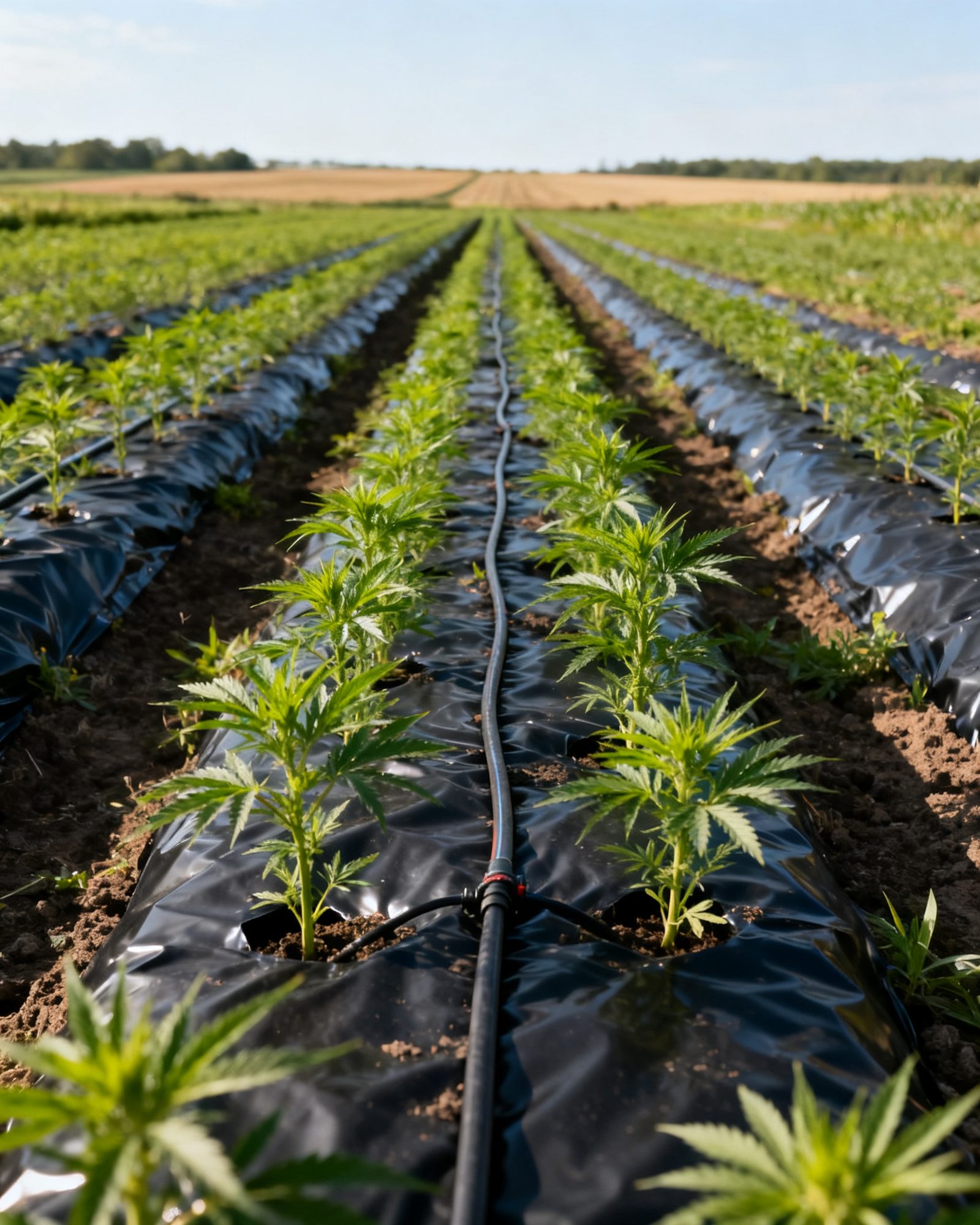
Hemp plant spacing is the first layout decision a grower makes, and it sets almost everything that follows: how much each plant branches, how much flower the field carries, how well air moves through the canopy, and whether the drip tape and mulch you already own will fit the rows. Oregon State University Extension has published figures for cannabinoid-type hemp, and they show a wide range of workable densities rather than one right answer; they are a reference point, not a rule for every region or crop type. Growing hemp requires a license under a state, tribal or USDA plan; the federal definition was amended in November 2025, with the change not yet in force and parts of it delayed, so check current rules with your state department of agriculture (or USDA where there is no state or tribal plan) before you commit a field.
What spacing does to a hemp plant
Hemp for cannabinoids, for grain and for fiber are grown very differently. Grain and fiber types are taller, grown through to seed, and planted at very high populations, as high as 500,000 to 1 million plants per acre. Cannabinoid types are grown from transplants or seed at far lower densities, and that is where spacing choices matter most.
Full-season, short-day types use nearly the whole season, 120-140 days. Depending on spacing they can be 5- to 7-feet-tall with up to a 5-foot diameter. Autoflower, day-neutral types finish in 70-90 days, stay 2- to 3-feet-tall with a 1- to 2-foot diameter, and in southern Oregon can be harvested by late July, avoiding the highest water demand.
Wide spacing gives more side branches per plant. Dense spacing gives more total flower per acre. Neither is automatically better; the choice depends on your equipment, your climate and how you plan to harvest.
Hemp plants per acre: the Oregon State figures
For cannabinoid types, Oregon State Extension describes widely spaced “Christmas tree” plantings on drip tape under plastic mulch that have generally run 2,000-4,000 plants per acre. A 6-by-5-foot spacing is only about 1,500 plants per acre. Above about 9,000 plants per acre (about 2.5-by-2 feet) full-season types reach high biomass. Autoflower types are not crowded until closer than about a 2-by-1 foot spacing (22,000 plants per acre or more).
| Planting style (cannabinoid types) | Spacing or density | Plants per acre |
|---|---|---|
| Wide “Christmas tree” on drip and plastic mulch | not stated | 2,000-4,000 |
| Very wide | 6-by-5 feet | about 1,500 |
| Full-season, high biomass | about 2.5-by-2 feet | above about 9,000 |
| Autoflower, crowded only closer than | about 2-by-1 foot | 22,000 or more |
Equipment and mulch width often decide the layout. A bed that fits your plastic mulch and your drip tape is usually a better starting point than a density chosen on paper and then forced onto the wrong equipment.
Hemp row spacing and airflow
Dense plantings in humid climates or under overhead sprinklers raise the risk of powdery mildew and gray mold. Drip irrigation and enough spacing for air movement help. That is the practical argument for wider rows in a humid region: not yield, but a canopy that dries.
Row spacing also interacts with how the crop is established. Transplants and direct seed do not behave the same way in the field, and the differences affect how precisely you can hit a target population. The comparison of hemp transplants vs. direct seeding covers that choice.
Drip irrigation under plastic mulch
Drip tape under plastic mulch is the usual layout for wide “Christmas tree” plantings. It delivers water to the root zone, keeps the foliage dry, and works with the wide spacing that gives each plant room to branch. For a grower setting up a first field, the industrial hemp farming basics in the US page covers the wider production frame.
Overhead sprinklers are the alternative, and they change the disease picture. Water on the canopy in a humid climate favors powdery mildew and gray mold. If overhead irrigation is the only option, wider spacing for air movement becomes more important, not less.
How hemp responds to irrigation
In semi-arid southern Oregon, hemp responded to irrigation but was more drought tolerant than it looks. Flower yield rose with water up to about the crop’s seasonal potential evapotranspiration and then leveled off. That plateau is the useful part: past that point, more water did not buy more flower. The Oregon State results apply to cannabinoid types; fiber and grain types respond differently.
Irrigation scheduling should follow the crop’s stage and the weather, not a fixed calendar. The autoflower types that finish by late July in southern Oregon avoid the highest water demand of the season.
Cold, frost and planting date
Mature hemp tolerates a light frost of 29-32°F that would kill seedlings in spring, so transplants go out after the danger of frost. Harvest ideally comes before the first hard frost, according to University of Vermont Extension. Timing harvest is also a compliance step: the official pre-harvest sample must be taken no more than 30 days before the anticipated harvest, and total THC rises as flowers mature.
What goes wrong
Crowding in a humid climate. Dense plantings under overhead sprinklers raise powdery mildew and gray mold risk. If you cannot keep the canopy dry, widen the spacing.
Choosing density before equipment. Mulch width and drip tape spacing often decide the layout. A density that does not fit your beds is a density you cannot plant.
Overwatering past the plateau. In the southern Oregon work, flower yield leveled off near the crop’s seasonal potential evapotranspiration. Water beyond that point did not add flower.
Missing the sampling window. The pre-harvest sample must be collected no more than 30 days before the anticipated harvest. A field that matures faster than expected can push you past the window.
Assuming the rules are settled. The federal definition was amended in November 2025; the change is not yet in force, and parts of it were delayed. Check current rules with your state department of agriculture before planting, and confirm your license is in place under a state, tribal or USDA plan.
Common questions
How many hemp plants per acre should I plant?
Oregon State Extension gives a range for cannabinoid types, not a universal rule. Wide "Christmas tree" plantings on drip tape under plastic mulch have generally run 2,000-4,000 plants per acre, while a 6-by-5-foot spacing is only about 1,500. Above about 9,000 plants per acre (about 2.5-by-2 feet) full-season types reach high biomass, and autoflower types are not crowded until closer than about a 2-by-1 foot spacing (22,000 plants per acre or more).
Does closer spacing increase yield?
Dense spacing gives more total flower per acre, and wide spacing gives more side branches per plant. Oregon State describes the trade-off rather than a single best density. Equipment and mulch width often decide the layout, so match the density to the beds you can actually plant.
Is drip irrigation better than overhead sprinklers for hemp?
Drip tape under plastic mulch is the layout Oregon State describes for wide plantings, and it keeps the foliage dry. Dense plantings in humid climates or under overhead sprinklers raise the risk of powdery mildew and gray mold. Drip irrigation and enough spacing for air movement help reduce that risk.
How much water does hemp need?
In semi-arid southern Oregon, hemp responded to irrigation but was more drought tolerant than it looks. Flower yield rose with water up to about the crop's seasonal potential evapotranspiration and then leveled off. Those results apply to cannabinoid types; fiber and grain types respond differently.
Do I need a license to grow hemp?
Yes. Growing hemp requires a license under a state, tribal or USDA plan. The federal definition was amended in November 2025, with the change not yet in force and parts of it delayed, so check current rules with your state department of agriculture (or USDA where there is no state or tribal plan) before planting.
Read next
Hemp Licensing, Pre-Harvest Sampling and THC Testing
How hemp licensing, FSA acreage reporting, the 30-day pre-harvest sampling window, total THC testing and negligence rules work under federal and state plans.
Hemp Harvest Timing and the Pre-Harvest Test
Hemp harvest timing is both an agronomic and a compliance decision. Learn season lengths, the 30-day sampling window, frost risk, and how to plan capacity.
Hemp Transplants vs. Direct Seeding on the Farm
How hemp growers choose between transplants and direct seeding: crop type, frost timing, hardening off, plastic mulch and drip, and the license rules that apply.